

DESCRIPTION: tropical, evergreen dendroid shrub with oval, dark green, glossy leaves, topped with small white dots, often mistaken for insects. Beige, light brown crust forms a contrast to the dark green leaves. Almost throughout the year has white flowers with small leafed deploying small green berries that gradually become reddish. Attention fruits are not edible. Carmona with normal leaves, the absence of pollinators engender. The plant is very suitable for indoor bonsai. Tastes aphids, if they occur, destroying the coating (Mospilan). LOCATION: in an apartment in a sunny window, the smaller bonsai protect from strong sunlight and cold drafts. Temperature 15 - 24 ° C. Watering: very carefully, regularly, roots tolerate waterlogging (permanent water podmisce), nor too dry. The frequency of watering varies with the richness of foliage, Ubud If the leaves, reduce watering. The wrong watering often reacts opadanie all the leaves, new leaves together with the flower buds grow in a light place in three weeks. FERTILISING: March to September after 2 weeks in winter after a month with liquid fertilizer. Repotting: every other year in the spring with a light zakrácením roots. LAND: Substrate for bonsai AGRO CS, or clay (akadama), peat, sand in the ratio 2: 2: 1 CUTTING: more branches, new shoots develop after 6-8 sheets for 1 to 3 sheet. Shaping conduction can throughout the year as needed. New shoots to slightly lignify

The tropical Carmona bonsai originates from the warm and humid regions of Southeast Asia. Although it is one of the most popular indoor bonsai, it requires a consistent care routine and a delicate touch when it comes to watering. If you provide it with a sheltered, warm location, balanced humidity, and plenty of light, it will reward you with lush growth and a constant cascade of white flowers.
For healthy development and bud formation, Karmona needs a very bright and warm location with a year-round temperature ranging from 15–24 °C. During the winter months, a southeast- or south-facing windowsill is ideal. Be careful of intense sun exposure in smaller pots during the sweltering summer and, above all, of cold drafts during winter ventilation, to which Carmona reacts by turning yellow and shedding its leaves.
Watering must be managed with great precision. The delicate roots of the tea plant cannot tolerate constant waterlogging or standing water in the pot (which leads to suffocation and root rot), but allowing the root ball to dry out completely is equally fatal. We water with lukewarm, settled water as soon as the soil surface begins to lighten slightly. To maintain the necessary microclimate in dry indoor air, wider bonsai pots and saucers filled with wet expanded clay have proven excellent; the evaporating water naturally humidifies the surrounding air around the crown.
To keep the root system well-aerated and prevent rot, we use only structured growing media:
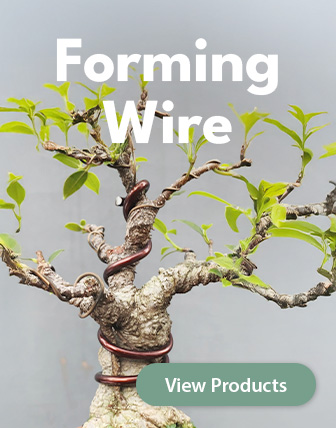
We shorten new shoots year-round after 6 to 8 leaves have developed, cutting just behind the 1st to 3rd leaf. Regular pruning stimulates branching of the crown and the formation of new flower buds. Wiring with aluminum wire can be done year-round on young, slightly woody shoots.
Leaf drop is most often a reaction to a cold draft from a window, overwatering of the roots, or, conversely, short-term extreme drying out of the potting mix. If a significant number of leaves fall from the plant, temporarily reduce watering (a plant with fewer leaves evaporates less water) and place it in a stable, warm spot with plenty of light near a window.
The young, succulent shoots and leaves of the Carmona occasionally attract aphids or other sucking pests. If you notice them, we recommend prompt treatment with a systemic spray (e.g., Mospilan). However, the white dots on the upper surface of the leaves are a natural part of Carmona microphylla’s anatomy and are not pests!
 All in stock - no illustration photos
 Delivery within 48 hours
 Over 30 years of experience!


 CZ
CZ SK
SK DE
DE PL
PL HU
HU ES
ES AT
AT FR
FR NL
NL IT
IT


