

Evergreen tree or shrub has small shiny, oblong, oval, dark green leaves. The flowers are bland white on female plants to create small red or black fruit - drupe. It is necessary to know where to find us the plants are introduced. Plants of the warm southern China and Taiwan are the room, holly from the colder north and the mountains of China, Japan and Korea are outdoors. LOCATION: bright window, hates the midday sun, the temperature 10 - 18 ° C. Watering: let the substrate dry out slightly, then pour profusely. FERTILISING: from spring to autumn, after 14 days in winter 1x per month. Transplanting: In spring, after 3 years, carefully zakracujeme roots. LAND: Substrate for bonsai AGRO CS, or clay, peat, sand, 1: 1: 1. CUTTING: If you grow 5-7 leaves, zakracujeme on two sheets. SHAPING: wire whenever needed.
The Japanese holly (Ilex crenata) is an evergreen shrub with small leaves that, thanks to its naturally dense growth and good tolerance for pruning, is also suitable for growing as a bonsai. It can be grown as both an indoor and outdoor bonsai, depending largely on where it was sourced. Plants from warm southern China and Taiwan are suited for indoor cultivation, while holly from the colder north and mountainous regions of China, Japan, and Korea are suited for outdoor cultivation.
For proper development and to maintain the rich color of its leaves, the holly requires a bright to partially shaded location. Indoors, it thrives best on an east- or west-facing windowsill protected from the scorching summer sun. In winter, holly prefers a bright and cool location. The specific wintering temperature must be adjusted according to the plant’s origin and cultivation type; for bonsai intended for outdoor cultivation, it is important to maintain natural winter dormancy and protect the root ball from severe frost. From late spring to early fall, after gradually acclimating the holly, it can be placed outdoors in a bright, partially shaded location, such as a garden or balcony. Protect it from the intense midday sun and be sure to check the moisture level of the potting mix regularly.
Keep the soil lightly and consistently moist. Holly cannot tolerate the root ball drying out completely, but it is also susceptible to prolonged waterlogging. Water with soft, settled water as soon as the top layer of the potting mix begins to lighten in color. After watering, always pour out any excess water from the saucer promptly. In the winter, in an overheated indoor environment, ensure adequate humidity and sufficient ventilation. Occasional misting can temporarily increase humidity around the crown, but it does not replace a suitable location or proper watering.
To prevent the holly’s roots from suffocating and to ensure the soil is sufficiently well-drained, use high-quality growing media:
Substrate: For repotting, you can use the Bonsai Master 2 liters substrate, which is designed for growing bonsai. When selecting a substrate, ensure it has sufficient drainage, aeration, and the ability to retain water appropriately. For growing in a mineral substrate, you can choose Bonsai Master AK (3–3.7 mm), 14 liters, based on Japanese Akadama.
Repotting: Holly bonsai are typically repotted in the spring, ideally before a period of intense growth. Younger plants may require repotting more frequently than older specimens; as a general guideline, repot every 2–3 years. When repotting, trim the roots carefully and to an extent appropriate to their health and the tree’s vitality.
Fertilization: During the growing season, fertilize approximately every two weeks with a suitable bonsai fertilizer according to the instructions on the package. In winter, reduce or suspend fertilization depending on temperature, growth rate, and how the plant is overwintered; do not fertilize during cold overwintering or dormancy.
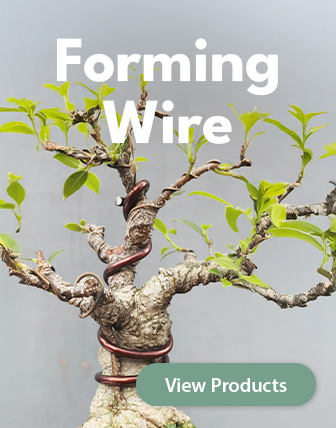
Holly tolerates pruning very well and sprouts quite readily even from older wood. During the growing season, you can shorten new shoots as needed—for example, after several leaves have formed, trim them back to one or two leaves. The specific extent of pruning should be adjusted based on the tree’s vigor, the desired shape, and the goal of shaping. Regular pinching will result in very fine and dense branching. Wire training should be done carefully and gradually. Older branches may be less flexible, so it’s advisable to assess their flexibility before bending them and to avoid sudden changes in direction.
Yellowing and leaf drop may be related to a dry root ball, prolonged waterlogging, unsuitable light or temperature conditions, or pest infestation. First, check the moisture level of the potting mix, the condition of the roots, and whether the location is suitable.
Ilex crenata is sometimes sold as an indoor bonsai, but many plants of this species are suitable for outdoor cultivation. Therefore, before overwintering, verify the origin and cultivation type of the specific plant. In winter, holly plants grown in pots should not be exposed to sub-zero temperatures, as this can cause the root ball to freeze. They overwinter best in a cool, bright, frost-free location (5–15 °C) or on a bright windowsill in a less-heated room.
 All in stock - no illustration photos
 Delivery within 48 hours
 Over 30 years of experience!


 CZ
 SK
 DE
 PL
 HU
 ES
 AT
 FR
 NL
 IT


