

The tropical Duranta (often incorrectly referred to as Durantha) is a vigorous woody plant that tolerates pruning very well and readily develops dense branching. It is one of the most fascinating indoor bonsai plants, bringing a true burst of color to any interior. For a Duranta bonsai to thrive and produce buds regularly, a few basic rules must be followed.
For abundant flowering, Duranta requires as much sunlight as possible. Place it on the brightest windowsill (ideally a south-, southeast-, or west-facing window). The room temperature should not drop below 15 °C throughout the year (the optimal range is 18–25 °C). From June through August, Duranta benefits immensely from being placed in full sun in the garden or on a balcony, where the intense light strengthens its foliage and deepens the color of its flowers.
Due to its rapid growth, the Duranta has higher watering requirements. Keep the potting mix evenly moist and water thoroughly as soon as the surface begins to lighten slightly. However, make sure the tree isn’t constantly standing in deep water in the saucer, as this could damage its delicate roots. During the heating season, it will appreciate occasional misting of the crown with lukewarm, settled water.
To promote abundant flowering and a healthy root system, choose well-draining growing media:
Potting mix: For routine repotting, we recommend our specially formulated Bonsai Master 2-liter potting mix, which retains nutrients exceptionally well. If you’re looking for a mineral-based substrate that prevents root rot, choose the Bonsai Master AK (3–3.7 mm) 14-liter substrate, made from Japanese Akadama.
Repotting: Repot young trees every 1 to 2 years in early spring (March/April), trimming the root ball by about one-third.
Fertilization: From March through the end of September, apply high-quality fertilizer for flowering bonsai every 14 days; this fertilizer should have a higher phosphorus and potassium content to stimulate the formation of new flower buds.
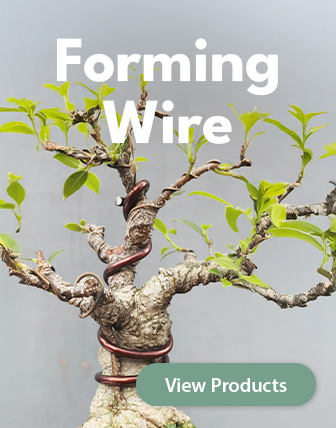
Duranta forms flower buds on new spring and summer shoots. The main shaping pruning is done in early spring before growth begins. During the growing season, we shorten overgrown shoots just beyond the second or third pair of leaves, after the internodes have lengthened slightly. After flowering, we remove old stems with remaining flowers (unless we want to keep the decorative yellow fruits), which encourages the formation of new, long-reaching inflorescences. When shaping with aluminum wire, work gently and with care on the semi-woody branches.
The most common cause of a lack of flowers is a lack of direct sunlight or poor nutrition. If buds form but fall off before blooming, the cause is usually fluctuations in substrate moisture (sudden drying out followed by overwatering) or a cold draft from winter ventilation.
Please note that the decorative yellow-to-orange spherical fruits that form after flowering are not intended for consumption and serve purely as an aesthetic feature of the tree.
 All in stock - no illustration photos
 Delivery within 48 hours
 Over 30 years of experience!


 CZ
 SK
 DE
 PL
 HU
 ES
 AT
 FR
 NL
 IT


