

The azalea bonsai is undoubtedly the most popular flowering bonsai in the world. These Japanese gems—especially the Satsuki varieties—are prized for their incredible willingness to bloom, their tiny leaves, and their ability to withstand even radical pruning. An azalea bonsai will bring the unique dynamics of the changing seasons to your collection. We carefully select and prepare all our trees so that they bring you nothing but joy.

Japanese azaleas are temperate-zone plants, which means that under our conditions, we grow them year-round as outdoor bonsai. Growing azalea bonsai has its own set of strict rules based on the specific botanical characteristics of this plant. Azaleas are strictly acid-loving plants with a very delicate, fibrous root system that is sensitive to drying out, overwatering, and calcium content in the soil and water. Proper care for an azalea bonsai therefore requires a careful approach to watering, substrate selection, and winter protection.
Azaleas thrive best in a bright, partially shaded location protected from the scorching midday sun, which could burn their delicate leaves and dry out the pot prematurely. During full bloom, it’s best to protect the tree from heavy rain so the flowers retain their beauty longer and don’t rot.
Proper watering of an azalea bonsai is the key to success. The delicate roots must never dry out completely, but at the same time, they must not be left standing in an overwatered, muddy environment for long periods. Water quality is crucial—azaleas cannot tolerate hard, chlorinated tap water. Use only soft rainwater for watering, or treated water that has been allowed to stand for a sufficient amount of time.
Due to its preference for acidic conditions, an azalea will wither in ordinary soil and its leaves will turn yellow (chlorosis). It requires an acidic, well-aerated growing medium. Often the best choice is Japanese Kanuma—a special, slightly acidic granular growing medium that breathes perfectly and retains optimal moisture. You can use either pure Kanuma or a mixture of Kanuma with other acidic and well-aerated components, depending on your growing conditions and watering method.
Regular fertilization of azalea bonsai from spring through fall with organic fertilizers is necessary to ensure abundant blooms the following year. When the tree is in full bloom, it is generally recommended to limit fertilization or skip it entirely (especially for trees in poorer condition) so as not to unnecessarily shorten the lifespan of the flowers themselves.
The Japanese Satsuki azalea (botanically Rhododendron indicum) is the most widely used worldwide for bonsai purposes. These plants have been bred in Japan for centuries specifically for cultivation in pots. They are distinguished by their small leaves and incredible variety of flowers. With some cultivars, it even happens that several different colors and patterns bloom simultaneously on a single tree.
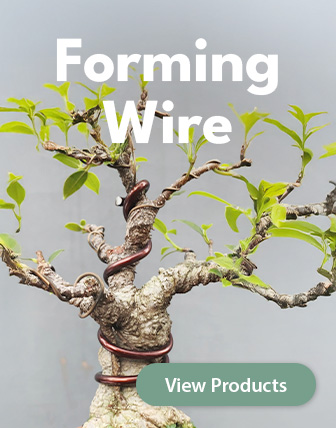
The main pruning is done immediately after flowering (usually in June). All wilted flowers, along with their stems and seed pods, must be removed so that the tree does not waste energy producing seeds, and new shoots should be shortened. Pruning later, at the end of summer or in the fall, is not recommended, because by that time the azalea is already forming flower buds for the following spring, and you would deprive yourself of blooms. Azalea shoots are relatively brittle, so shaping a bonsai by wiring it with soft aluminum wire requires the utmost care and finesse.
Although they are outdoor plants, the delicate root system of azaleas in shallow pots is vulnerable. The roots in the pots must be protected from severe frost, icy, drying winds, and dehydration. The ideal solution for Czech conditions is overwintering in a frost-free cold greenhouse, a sunken hotbed, or by burying the pot in the ground in a shady spot in the garden and thoroughly protecting both the root ball and the above-ground parts (e.g., with pine needles).
The most common cause is pruning at the wrong time. If you prune the tree in late summer or fall, you’ll remove flower buds that have already formed. Another reason may be a location that is too shady during the summer, when the tree does not receive enough sunlight to form flower buds, or a general lack of nutrients during the previous season.
 All in stock - no illustration photos
 Delivery within 48 hours
 Over 30 years of experience!


 CZ
CZ SK
SK DE
DE PL
PL HU
HU ES
ES AT
AT FR
FR NL
NL IT
IT


